Custom Optics: From Your Drawing to Delivered Part
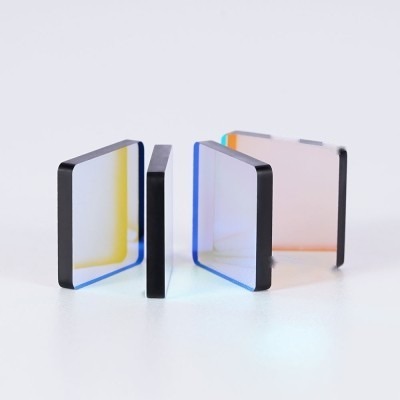
Catalog optics cover most needs, but sometimes your system demands something specific: an unusual wavelength, a non-standard size, a tight tolerance or a coating that does not exist off the shelf. That is when a custom optic becomes the right decision — and knowing the process makes the whole experience far smoother.
It starts with a clear specification. The more completely you can describe what you need, the faster and more accurate the quote. At minimum, include the optic type, dimensions, substrate, wavelength range and the performance you expect — reflectance, transmission, damage threshold or surface quality.
A drawing helps enormously. Mark the clear aperture, thickness, edge treatment, chamfers and any mounting features. If you have tolerances — thickness ±0.1 mm, for example — state them explicitly, because tighter tolerances affect yield and cost. Tolerance stack-up is a common source of surprises, so think about how the part fits into your assembly.
Substrate selection comes next. Fused silica suits UV, high power and low fluorescence; borosilicate is economical for visible work; and specialty glasses serve specific dispersion or infrared needs. Our optical glass range includes AR quartz, SCHOTT grades and infrared materials to cover most of these cases.
Coating is where custom optics diverge most from catalog parts. Tell us the wavelength band, angle of incidence, polarisation and laser power. We design the film stack for your exact requirement — whether that is a high-reflective mirror, a broadband AR layer or a narrow bandpass — and verify it with measured spectral data.
Quantity matters early in the conversation. A single prototype and a production run of a thousand parts follow very different paths: prototypes may use rapid tooling, while production involves fixtures, process control and lot testing. Sharing your expected volume lets us recommend the most economical approach.
Prototyping is the safety net. We recommend building a small batch first so you can validate optical performance and mechanical fit in your actual system. It is far cheaper to adjust a design at the prototype stage than after a production order.
Manufacturing then follows a defined chain: cutting and drilling, grinding and polishing to the required surface quality, coating under controlled conditions, and finally inspection. Each step is measured — dimensions, surface flatness, spectral performance and appearance — and documented against your specification.
Quality documentation is part of the delivery. Depending on your needs, we can supply a certificate of conformance, measured spectral curves, surface quality reports and lot traceability. For regulated industries, this documentation is often as important as the part itself.
To start a custom project, send your drawing or specification to our team along with the intended application and quantity. Our engineers will review feasibility, suggest improvements where tolerance or cost can be optimised, and return a quote with a realistic lead time.